


I had other things to do at that moment. But once the idea sparked, there was no avoiding it.
So, as we are both seasoned with neurodiversity, double hyperfocus it was.
I knew that if I didn’t lean into his enthusiasm, it might never surface again.
Building a gingerbread house earlier this week had nothing poetic about it. Just a kid at the edge of his creativity and focus, and a mom trying to keep the experience positive while keeping the mess to a minimum.

Apparently Gingerbread Starts With Geometry
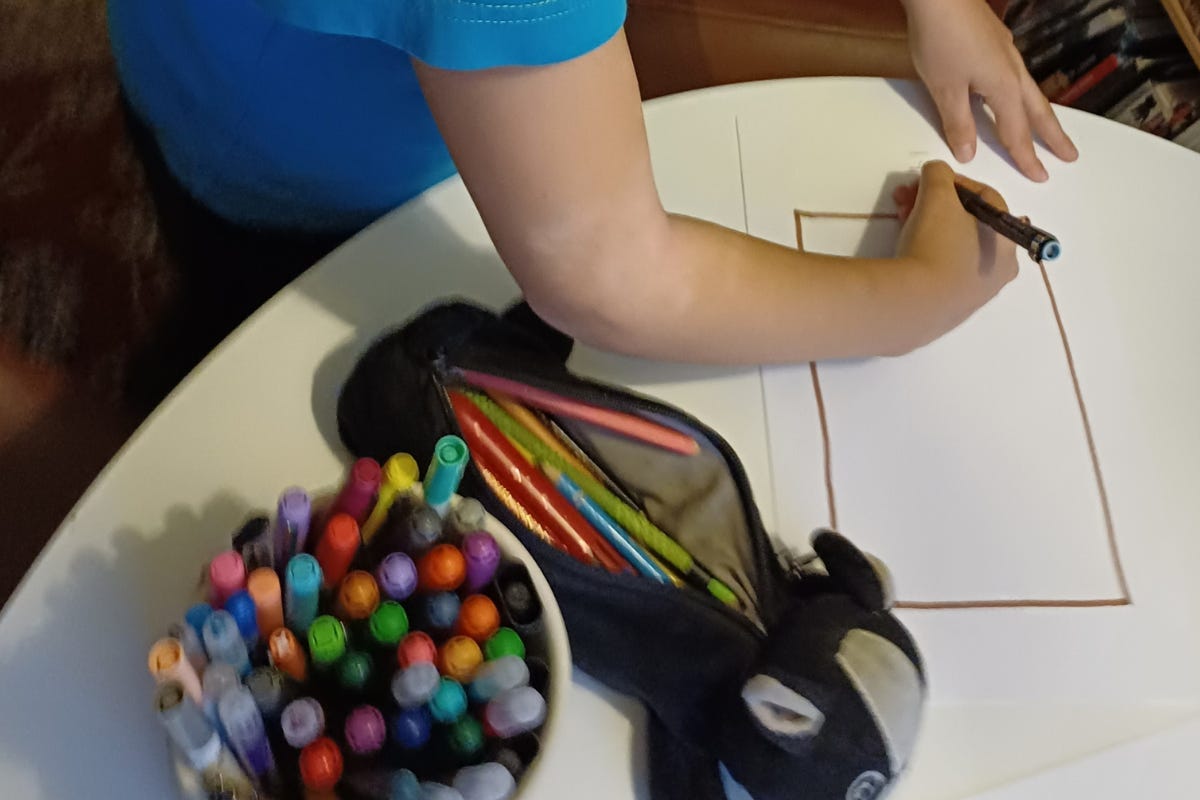
Even though I asked, my son didn’t start by drawing a house.
He grabbed a ruler, a stack of white paper, and began sketching parts. Walls. Roof pieces. Angles. Exact measurements he was very proud of.
We talked about what had to match and why the base had to be larger than the house itself. A surprisingly difficult concept.
While he was fully in it, confident and curious, ruler in hand, I stayed close, smoothing the path so the experience would remain a good one.
Baking the Pieces (and Accepting Their Opinions)
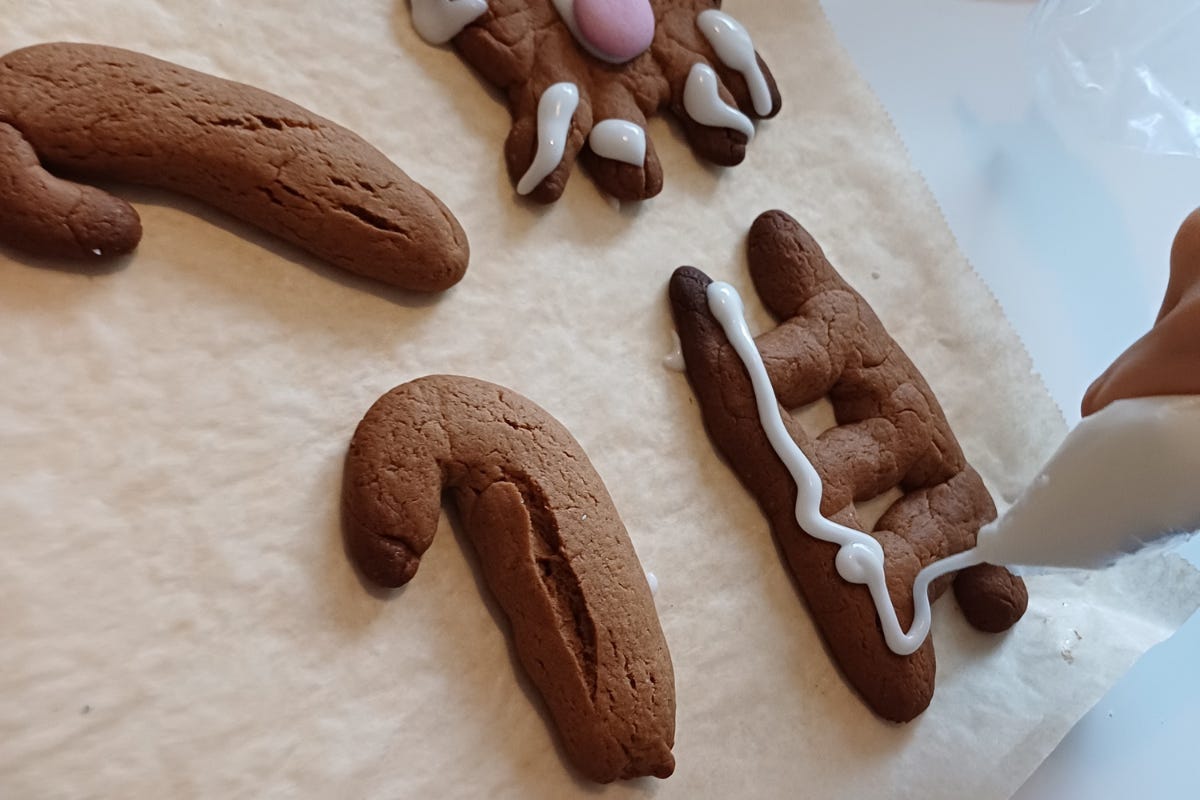
We used ready made dough and cut the pieces using ‘the blueprint’ as our guide. I even managed to find a semi clean ruler for the actual dough work. Half the dough disappeared into strategic snacking. The rest became walls and roofs.

Some pieces came out a little burned, some a little soft. One roof part puffed into a shape that definitely was not in the plan. We almost forgot to cut doors and windows before baking, but remembered at the last second.
It was messy, uneven, and somehow exactly right for a gingerbread house.

Day Two: The Part Where Patience Was the Main Ingredient
We let the pieces rest overnight. Neither of us had the energy to go further.
The next day, we started gluing the house together with icing, which works like edible cement but requires you to hold each wall in place for about ten minutes.
Ten minutes is an eternity for a kid who has other things to do.
But he managed. Barely. And so did I. Barely.
Some, or most to be honest, pieces did not line up and were warped. One roof part was too soft and nearly cracked under the weight of candy. We adjusted, propped, rotated, and kept going until it stood.

Decorating: Two Sugar Pugs and a Lot of Strong Opinions
This was the moment my kid had been waiting for.
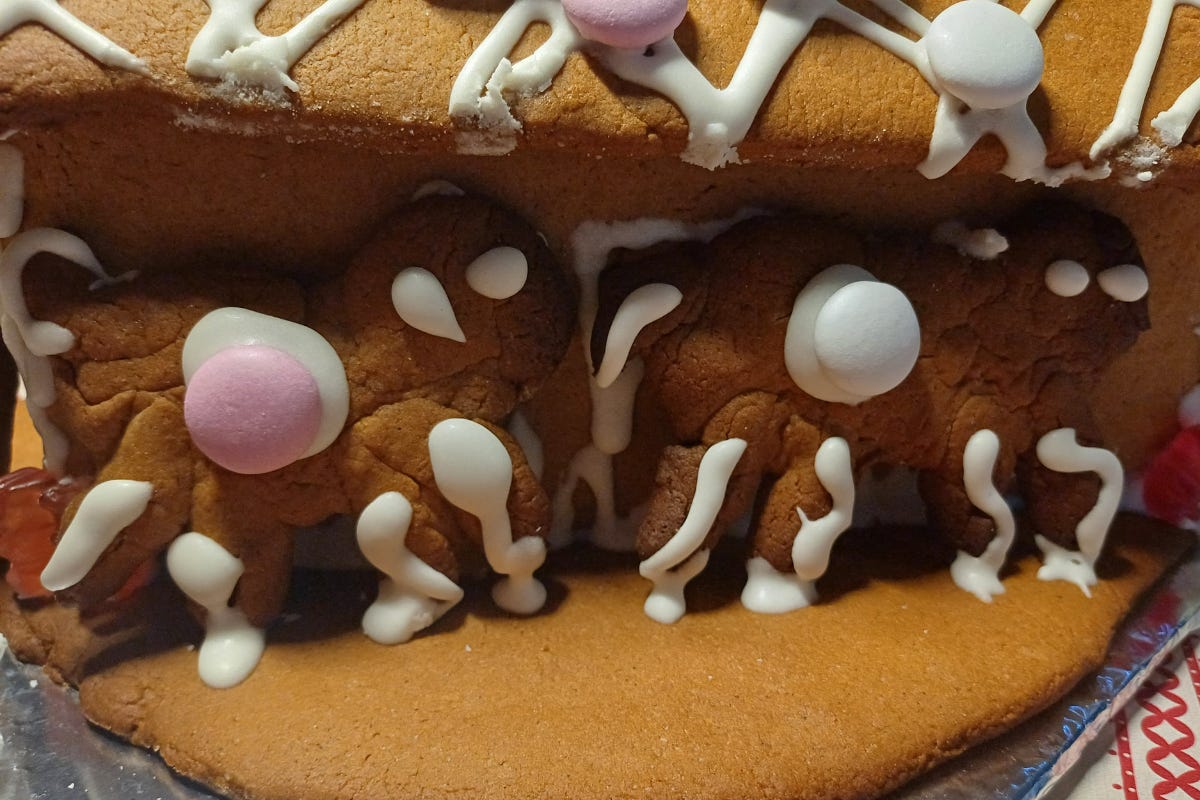
He decorated the two sugar pugs with care, gave each one a specific decorative color, and placed them proudly in front of the house.
We added ladders and candy canes, creating a slightly chaotic scene. I quietly reinforced a few pieces from the back so they would not collapse overnight.
Nothing dramatic. Just basic structural parenting.
The Confidence Leap
When everything was done, my kid stepped back, looked at the house, and said:
“Actually… I think I could build real houses too.”
And looking at our crooked but cute construction I admired that confidence. He wasn’t thinking about the burned edges or crooked rooflines. He saw the finished thing and assumed possibility.
“This is the most beautiful thing I have ever built.”
There’s something refreshing about that. Kids don’t overthink the flaws, unless we point them out to them. And again, I didn’t.
Big junk of neurodiversive parenting is guarding the positive, catching and praising for the effort and polishing the memories.

Imperfections Still Make a Whole
Later, the house was finally sitting on the counter. Leaning a bit, decorated with enthusiasm, guarded by two candy pugs, admired by us - I reflected on this.
Nothing went exactly according to plan.
The shapes changed.
Some parts burned.
Some needed more support than expected.
And yet the house stood.
Kid was so happy and proud.
I was just happy.
The process worked because we kept going, not because everything went right.

Are My Drafts Just Gingerbread Pieces?
I realized how familiar the whole thing felt.
My poems rarely match the blueprint in my head.
Some come out warped, some too soft, many of them overbaked.
Some need to sit overnight before I can even look at them again.
But the same rule applies: the work still stands if I keep building.
I don’t need the perfect piece to move forward. I just need the next step.

Chaos is Given; Control Is Optional; Finishing Is Not
This gingerbread project reminded me that:
I don’t need to control every part of the process.
I don’t need to force the outcome.
I definitely don’t need everything to fit on the first try.
And sometimes, what comes out is way better, than what I had in mind in the beginning.
What matters is finishing the damn thing — crooked roof, mismatched walls, small triumphs, all of it.
That’s how the gingerbread house got built.
And honestly, this might just be how my dystopian fantasy poetry will get built too.

Own your glitch.
Yours,
Sam
ps. Don’t be a stranger. I’d love to hear your thoughts.
- - - - - - - - - - - - -
All works are created and copyrighted by Samia Oldman.
Happy holidays to you all!
WHAT IS HUSH HALO?
Hush Halo is a dystopian fantasy poetry collection set in a near-future shaped by technology, silence, and optimized perfection. Each poem is paired with its own immersive soundscape. Learn more in Square One.
Context: After the Great Optimization, a privileged group integrated into the system, believing they had now perfected themselves.

POETRY · WRITER’S UPDATE · BUY BOOKS · SHOP · LINKS
Hush Halo is an indie art project.
To follow and support my work, consider
becoming a free or paid subscriber.
🖤Feeling it? Share your thoughts ↓
The process and the end result - perfectly imperfect! It looks great.
Sam! He saw the process and he loved it! “Actually… I think I could build real houses too.”, this makes my heart sing!
Love your two pugs, both the gingerbread ones and the little family member ones!
Hope you enjoy a very Merry Christmas and see you back when you're ready to share new experiences with us. 🤗