

In this post I’m opening up how I design my poetry books beyond the writing itself. Covers, structure, recurring elements, visuals, and the small decisions that turn a collection into something you can actually experience.
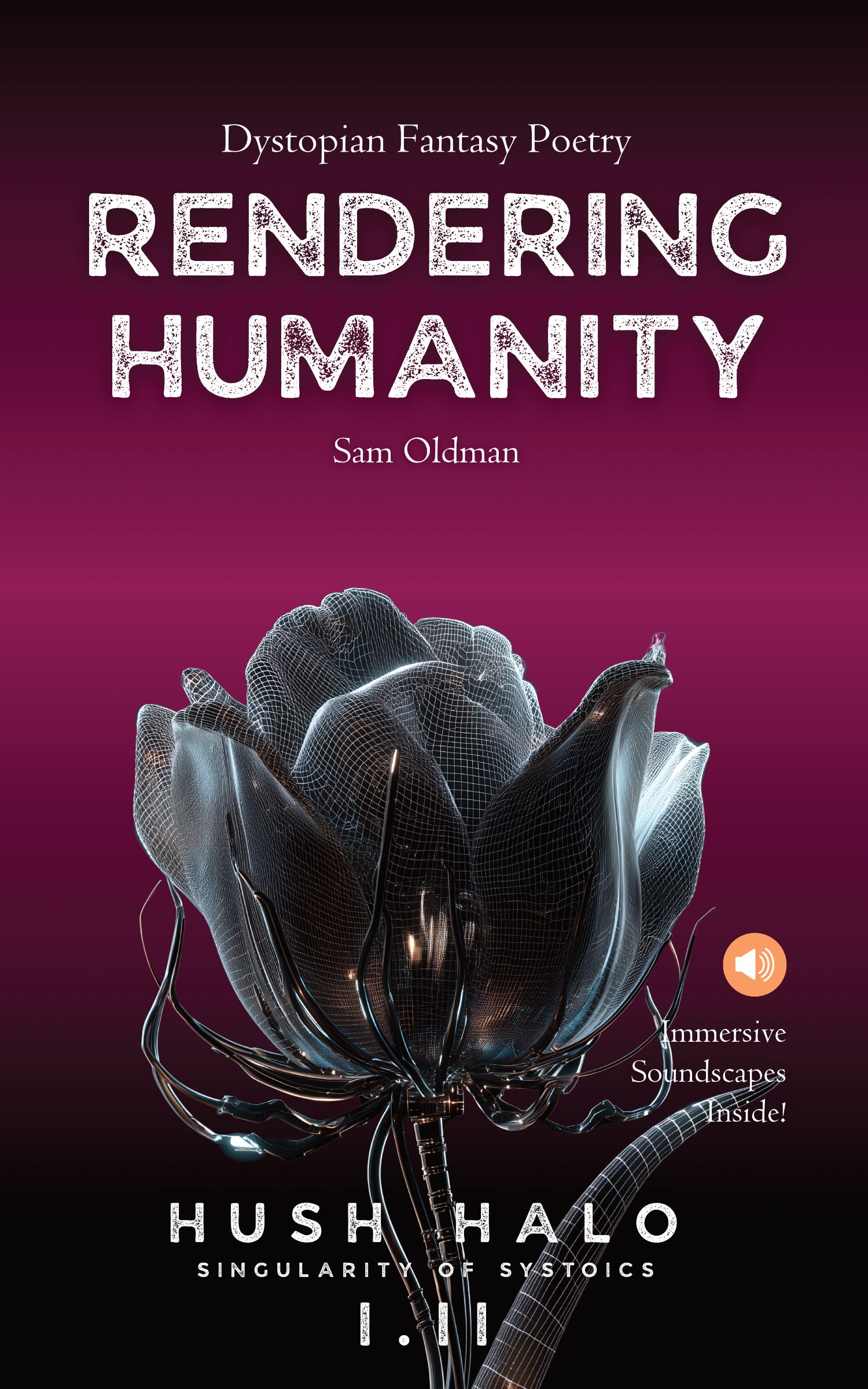
First things first. My new book Rendering Humanity is now in Amazon’s publishing queue. Release date is Tuesday, May 12. [AMAZON]
A Book to Treasure
I’ve been deep in something a bit more concrete lately. Writing and editing, for sure, but also shaping the book as an object. The cover, the structure, the contents. The point where this stops being just text and becomes something to hold and treasure.
The Cover
I feel, that the cover is often the hardest decision, especially with poetry. A novel can lean on story, characters, and setting. A poetry book has to signal tone, not plot. It has to invite without explaining too much.
I feel like I made all the hard decisions with my first book. Now, with the second one, I more or less build on those first choices. Good or bad.
What the Flower?!
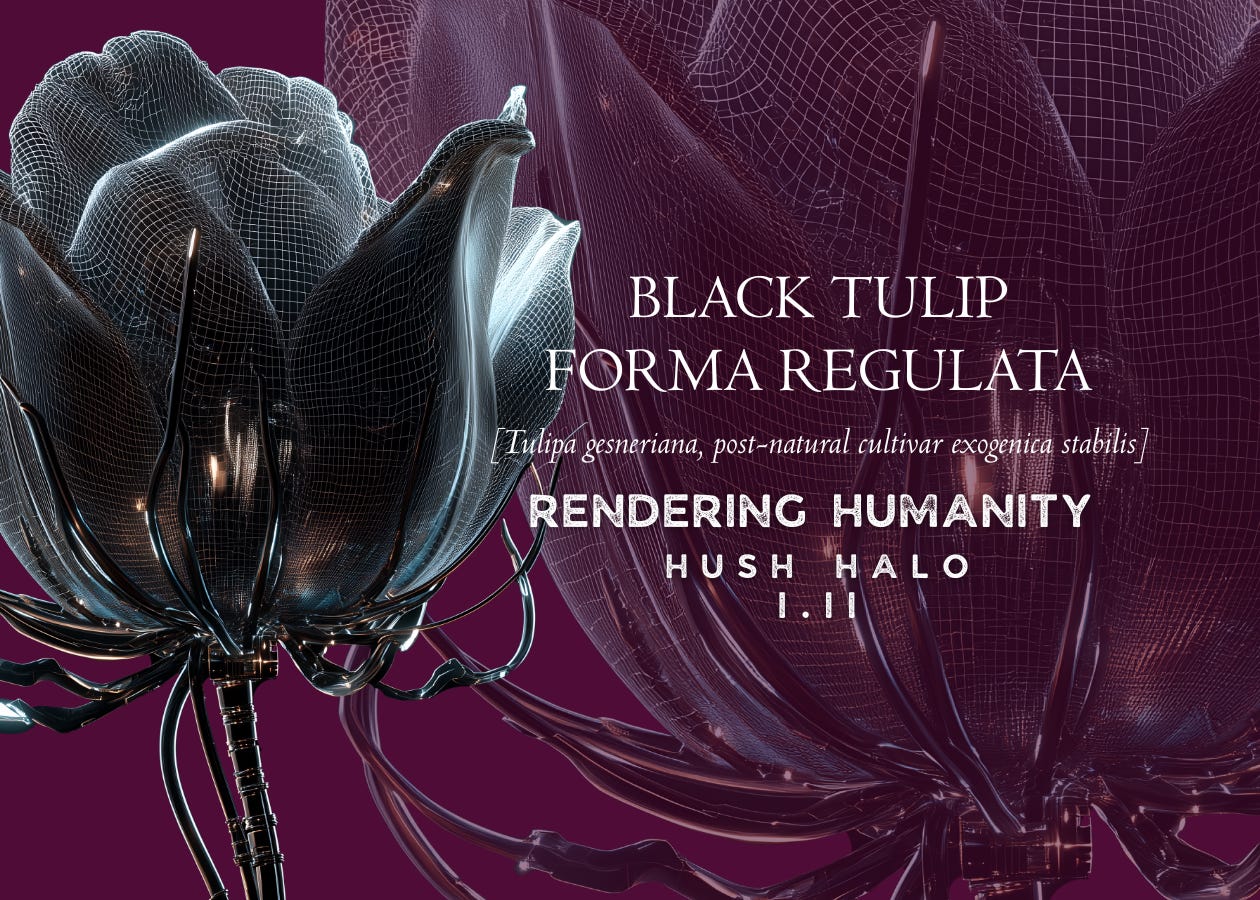
On Rendering Humanity, I ended up sticking with the same core visual I introduced in the first book. The flower.
Which is funny, because it doesn’t directly exist in the story at all.
But somehow, that’s kind of the point. Let me explain.
The flower became a symbol. Something organic in a controlled, constructed fantasy. Something so fragile, but here it is in persistent, optimized format. With a slightly steampunk-inspired aesthetic, something clicked. The contrast worked. Soft versus mechanical. Growth versus control.
My made up flowers give me a visual anchor that cuts through the dystopian, while remaining beautiful and feminine. It feel that it gave the whole concept a visual identity that I can carry across books.

Adding My Nerdy
There’s also a small detail in each book, I had fun with. At the very end of the book, there’s a short one spread note about this fictional flower. As if it exists outside the main narrative, yet leading the concept.
Designing a Poetry Book
The inside of a book can be super simple or as complex as you like.
Why Hush Halo books needed some relevant, repeatable elements?
Concept poetry adds real complexity to the structure. In Hush Halo each poem has a written layer and a soundscape you can access by scanning a QR code next to it. For example, Rendering Humanity has 134 soundscapes, each matching its poem.
Book With Lungs
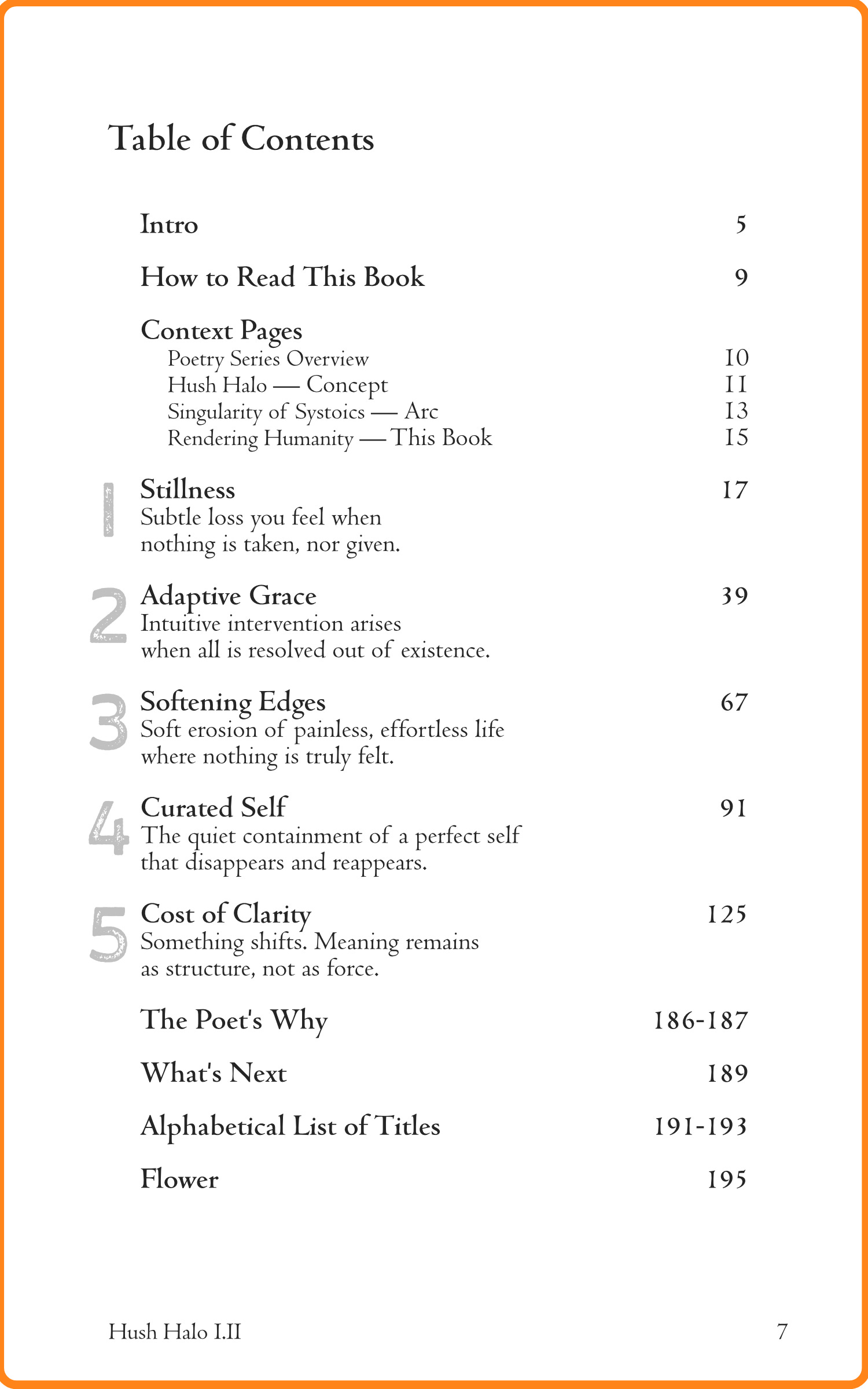
Images act like lungs for the book. They help the reader pace themselves and take a breather when needed.
My first book was visually more straightforward. I was testing things quite randomly while trying to keep it simple enough. No red strings attached.
This time, on my second book, I moved toward continuity.
I built the visuals as an ongoing stream. Instead of isolated images, they can be placed side by side horizontally to form a continuous flow.


Abandoning Some
Not everything I write makes it into a book. Some pieces are too similar. Some belong to a different part of the arc. Some just don’t hold up when placed next to others.
My editing process leaves plenty of material to share here on Substack, that never made it to my books. Consider subscribing for full access.
Q: Is there something here you’d like me to go deeper into? Did this bring up any questions?

x
WHAT IS HUSH HALO?
Hush Halo is a dystopian fantasy poetry collection set in a near-future shaped by technology, silence, and optimized perfection. Each poem is paired with its own immersive soundscape. More background: Square One.

POETRY · WRITER’S UPDATE · BUY BOOKS · SHOP · LINKS
🖤 Always happy to hear your thoughts. ↓
I love your Total Recall flower! Perfect for the art you create.
Ooh, I find these behind-the-scenes looks endlessly fascinating! I love the steampunk flower aesthetic. And this is beautiful: "Images act like lungs for the book." Do you design your covers yourself?